

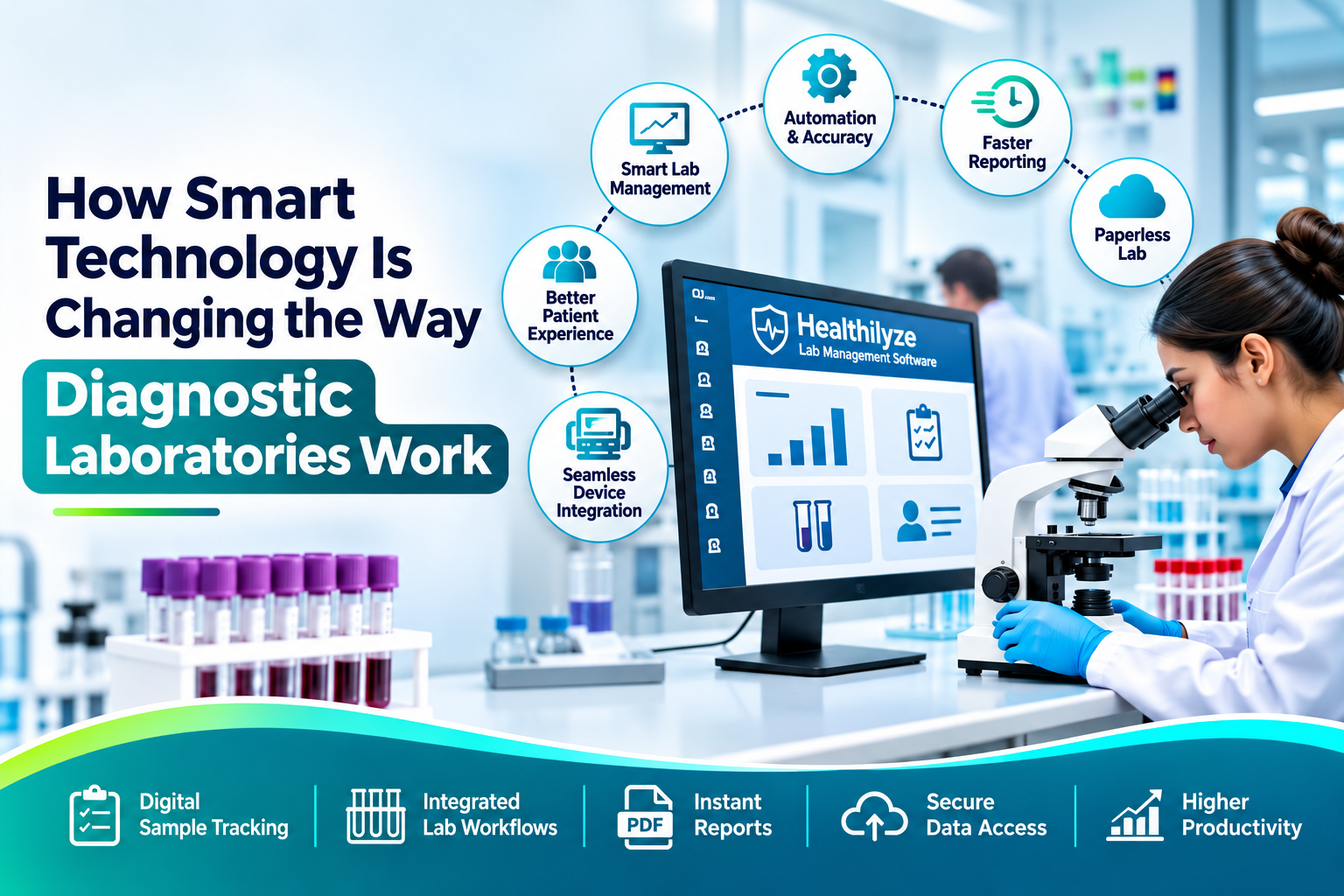
Diagnostic laboratories play an important role in modern healthcare. Every day, laboratories handle patient registrations, sample details, test records, report preparation, billing and many other activities. Managing all these tasks manually can take considerable time, especially when the number of patients increases.
Earlier, many laboratories depended on paper registers, handwritten reports and separate billing records. Although these methods worked for smaller operations, they could become difficult to manage as laboratory services expanded.
Today, technology is changing the way diagnostic laboratories work. Digital tools are helping laboratory owners organise their daily activities, manage information and provide a more convenient experience to patients.
Smart technology is not simply about using computers. It is about making laboratory operations easier, reducing repetitive work and keeping important information organised.
Let’s understand how technology is transforming diagnostic laboratory management.
1. Digital Patient Registration Makes Daily Work Easier
Patient registration is one of the first activities performed in a diagnostic laboratory. Staff members need to collect information such as patient names, contact details, age and other necessary details before proceeding with testing.
When registration is maintained in paper registers, finding previous patient information can become difficult. Staff may need to check several pages or search through old files.
Digital patient registration provides a more organised way to maintain these records. Laboratory staff can enter patient information into a software system and retrieve available records whenever required.
It also helps laboratories maintain patient histories, making it easier to refer to previous information during future visits.
2. Better Test Management for Growing Laboratories
Every diagnostic laboratory offers different tests depending on its services and requirements. Managing a large test list manually can become confusing.
A digital laboratory management system allows lab owners to organise their test information in one place.
For example, laboratory owners can:
- Add new tests whenever services expand.
- Create different test groups.
- Prepare customised test packages.
- Update test names and prices.
- Organise frequently requested tests.
- Manage test categories according to laboratory requirements.
Another useful facility is the ability to maintain different test prices for different clients, doctors or hospitals, wherever required.
This flexibility helps laboratory owners manage their services according to their business requirements.
3. Faster and More Organised Report Preparation
Preparing reports is one of the most important responsibilities of a diagnostic laboratory. Reports need to contain properly recorded test results and relevant patient information.
Manual report preparation can involve repeated writing, calculations and data entry. These activities may increase the chances of typing or calculation mistakes.
Digital reporting tools help laboratories organise report information and simplify the preparation process.
For example, automatic parameter calculations can help calculate related test values using predefined formulas. Report templates can also make it easier to maintain a consistent format.
Laboratory staff can manage report details, review results and prepare reports through a more organised workflow.
However, every result should still be checked and approved by the appropriate qualified laboratory professional.
4. Easy Report Sharing Through WhatsApp
Patients usually want to receive their reports without unnecessary delays. Traditionally, they may have needed to visit the laboratory again to collect printed reports.
Digital report sharing has made this process more convenient.
With WhatsApp report-sharing facilities, laboratories can send reports to patients using a PDF or report link.
This provides several advantages:
- Patients can access reports through their smartphones.
- Laboratories can reduce the need for repeated printing.
- Reports can be shared without requiring another physical visit.
- Patients can keep digital copies for future reference.
- Laboratory staff can save time during report distribution.
It also makes communication between laboratories and patients more convenient.
5. Simplified Billing and Payment Management
Billing is another important part of everyday laboratory operations. Laboratories need to maintain patient invoices, test charges, received payments and pending balances.
When all these details are maintained manually, managing financial records can become time-consuming.
Digital billing and payment management tools help organise these activities.
Laboratory staff can prepare invoices, record payments and check pending amounts through a central system.
Payment reminders can also help laboratories follow up on outstanding balances.
Maintaining organised billing records makes it easier for laboratory owners to understand their daily transactions and manage their business operations.
6. Access Laboratory Information from Anywhere
Laboratory owners do not always remain inside their laboratories. Sometimes they need to check business information while travelling or working from another location.
Cloud-based laboratory software offers flexibility by allowing authorised users to access supported information through an internet connection.
Depending on the software and user permissions, laboratory owners and staff can access patient records, reports, billing information and other available features.
This can be particularly useful for laboratories that want to manage their operations without depending entirely on one office computer.
It also provides greater flexibility when managing multiple responsibilities throughout the day.
7. Better Data Management and Backup Protection
Patient records, test information and laboratory reports are valuable business data. Losing important information can create difficulties for laboratory owners and patients.
Maintaining all records on a single computer without proper backup arrangements can increase the risk of data loss.
Cloud-based laboratory systems with backup facilities help maintain digital information and support better data management.
Laboratory owners should consider the following points when choosing software:
- Secure storage of laboratory information.
- Appropriate access permissions for staff.
- Regular data backup facilities.
- Data privacy and protection measures.
- Reliable technical support.
Choosing a system with suitable security and backup arrangements can help laboratories manage their information more responsibly.
8. Role-Based Access for Laboratory Staff
Not every employee needs access to every laboratory function. For example, billing staff may need access to invoices and payments, while report-related staff may need access to reporting functions.
Role-based access allows laboratory owners to assign permissions according to staff responsibilities.
This helps organise the working environment and gives owners better control over how different users interact with the software.
It also supports a more structured workflow when several employees are handling different laboratory activities.
9. Better Patient Communication and Notifications
Communication is an important part of the patient experience. Patients often contact laboratories to ask whether their reports are ready or whether their payments have been recorded.
Digital notification facilities can make communication easier.
Features such as report-ready alerts, SMS notifications and WhatsApp report sharing help laboratories keep patients informed.
Instead of depending entirely on manual communication, laboratories can use available notification tools to provide timely updates.
This can reduce repeated enquiries and make the reporting process more convenient for patients.
10. A More Paperless Laboratory Environment
Paper registers, printed invoices and physical report copies can create a large amount of paperwork over time.
Digital laboratory management helps reduce unnecessary paper usage by maintaining information electronically.
For example, patient records, billing information and reports can be managed digitally.
A paperless approach can help laboratories organise their records, reduce physical storage requirements and make information easier to retrieve.
Printed documents may still be required in certain situations, but digital management can reduce dependence on paperwork for everyday activities.
How Healthilyze Helps Modern Diagnostic Laboratories
Healthilyze is designed to make diagnostic laboratory management simpler through a range of digital tools.
Instead of managing different activities through separate registers and manual processes, laboratories can use Healthilyze to organise their daily operations through one platform.
Some of its useful features include:
Patient Management: Maintain patient information and manage patient history in an organised way.
Test Management: Add, edit and organise laboratory tests according to your requirements.
Test Group and Package Management: Create unlimited test groups and packages to organise laboratory services.
Billing Management: Manage patient billing, invoices and payment records.
WhatsApp Report Sharing: Share reports with patients through WhatsApp using a link or PDF.
Report-Ready Alerts: Help patients know when their reports are ready.
Automatic Parameter Calculations: Use predefined formulas to calculate related test parameters and reduce repetitive calculations.
Expense Management: Maintain records of laboratory expenses.
Role-Based User Access: Create separate user permissions according to staff responsibilities.
Cloud-Based Access: Access supported laboratory information through an internet connection.
Backup Protection: Support better management and protection of laboratory information through backup facilities.
These features help laboratories manage their daily activities in a more organised way.
Conclusion: Take Your Diagnostic Laboratory Towards Digital Management
The diagnostic laboratory industry is gradually moving towards digital management. From patient registration and test management to billing, report preparation and patient communication, technology is helping laboratories improve their everyday working processes.
Moving from manual records to digital systems does not mean changing everything overnight. Laboratories can gradually adopt useful tools that solve their daily management challenges.
Choosing the right smart diagnostic lab software can help laboratory owners save time, organise information and manage their operations more efficiently.
Follow us on Instagram: https://www.instagram.com/healthilyze/
Check Software Here: https://healthilyze.in/
READ MORE: Easy Lab Software Free Download
 Previous Post
 Next Post