

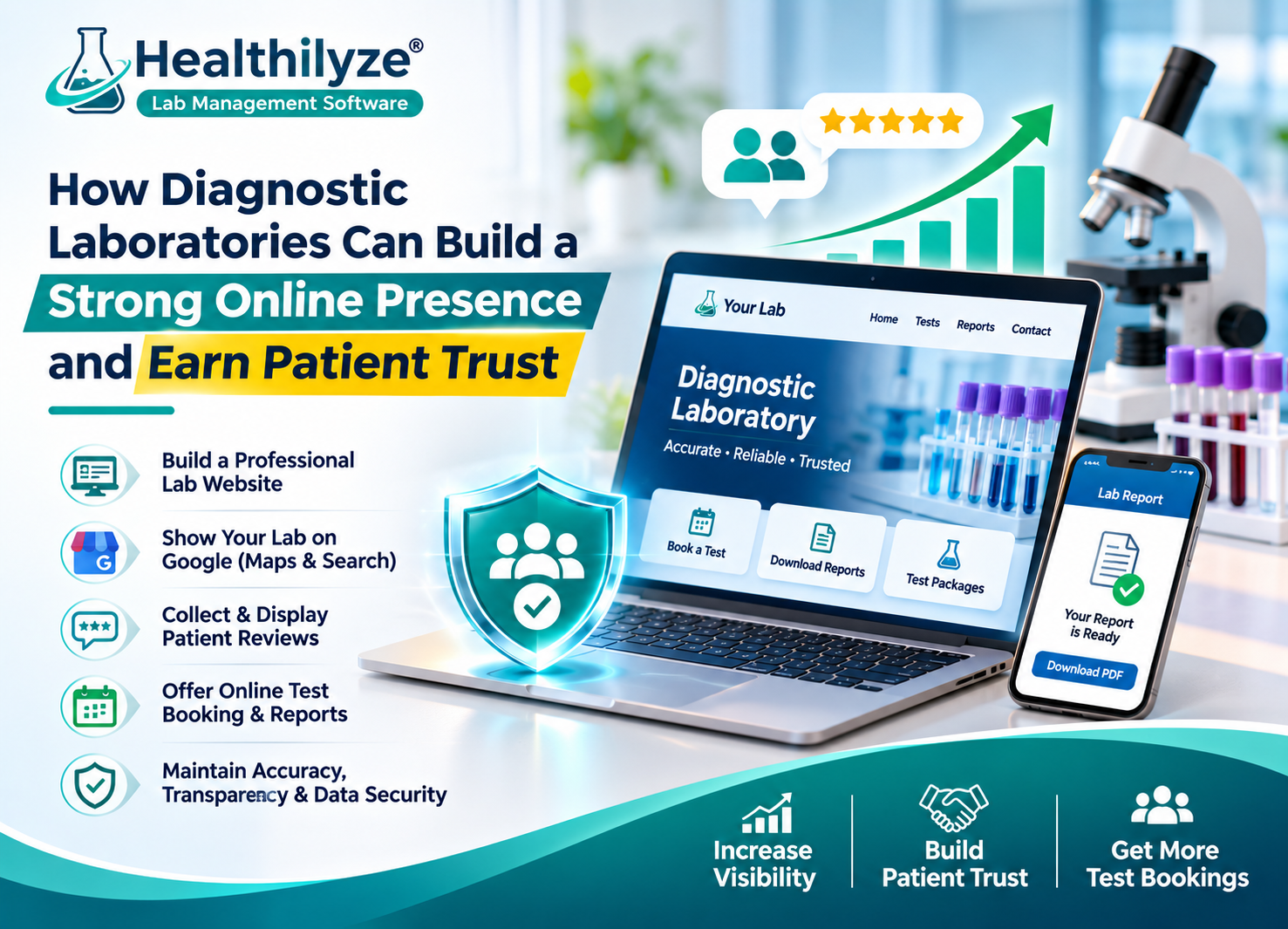
The way patients find and choose diagnostic laboratories is changing. Earlier, people generally visited a laboratory recommended by their doctor, family member or friend. Today, many patients first search online to find nearby diagnostic centres, check available tests, compare services and read customer reviews.
For laboratory owners, having a good testing facility is important, but making that facility visible online is equally valuable.
A strong online presence helps laboratories communicate their services, provide useful information and build long-term relationships with patients. Whether you operate a small pathology laboratory or a multi-location diagnostic centre, improving your digital presence can help you reach more people.
Let’s explore practical ways to make your diagnostic laboratory more visible and trustworthy online.
1. Create a Professional Website for Your Laboratory
Your website often creates the first impression of your diagnostic laboratory.
When someone searches for your laboratory online, they should be able to understand what services you provide and how to contact you.
A professional laboratory website should include:
- Laboratory introduction and background.
- Available diagnostic tests and packages.
- Laboratory address and working hours.
- Sample collection information, if available.
- Contact details and appointment instructions.
- Information about qualified professionals and facilities.
Keep the website simple, mobile-friendly and easy to navigate.
For example, if someone searches for a CBC test in their city, a clearly written page explaining the test, its purpose and availability can help them understand your services.
2. Keep Your Google Business Profile Updated
Google Business Profile is an important tool for local visibility.
When patients search for terms such as “diagnostic laboratory near me” or “pathology lab in my city”, Google may display relevant local businesses.
Laboratory owners should regularly maintain their business information.
Important details include:
- Correct laboratory name.
- Accurate address and phone number.
- Updated working hours.
- Relevant laboratory categories.
- Genuine laboratory photographs.
- Website link.
- Answers to customer questions.
Encourage satisfied patients to share honest reviews. Respond professionally to feedback without revealing private patient information.
An updated profile makes it easier for potential patients to discover and contact your laboratory.
3. Publish Educational Content About Laboratory Tests
One of the most effective ways to provide value through your website is by publishing educational articles.
Patients frequently search for information about different diagnostic tests, their purposes and preparation requirements.
Your laboratory can answer common questions through informative blog posts.
For example:
- What Is a Complete Blood Count (CBC) Test?
- Why Do Doctors Recommend a Thyroid Function Test?
- What Is the Difference Between Fasting and Non-Fasting Blood Tests?
- How Should Patients Prepare for a Blood Test?
- Why Is Regular Health Screening Important?
- What Information Does a Lipid Profile Test Provide?
Make sure the information is medically accurate and reviewed by a qualified healthcare professional.
Avoid diagnosing patients or suggesting that a single test result can confirm a medical condition.
Educational articles help visitors understand laboratory services while giving your website useful information beyond advertisements or product descriptions.
4. Use Social Media to Communicate With Your Audience
Social media provides an opportunity for diagnostic laboratories to communicate with local communities.
Instead of posting only promotional banners, share information that people can actually use.
Some useful content ideas include:
- Information about common diagnostic tests.
- Laboratory hygiene and safety practices.
- General health awareness campaigns.
- Explanations of sample collection procedures.
- Frequently asked questions.
- Important laboratory announcements.
For example, a post explaining why proper preparation matters before a fasting blood test can educate patients and encourage them to follow their doctor’s instructions.
Use clear language, attractive graphics and consistent branding.
5. Improve Patient Communication
Good communication is an important part of the laboratory experience.
Patients may have questions about test availability, sample collection, report collection and billing.
Laboratories should provide clear communication at every stage.
Consider these practices:
Before testing: Explain preparation instructions and sample collection requirements.
During registration: Collect accurate patient details and confirm the requested tests.
After sample collection: Provide information about the expected report collection time.
After report completion: Inform patients when their reports are ready through appropriate communication channels.
Always use secure communication practices and protect confidential patient information.
6. Maintain Accurate Patient and Laboratory Records
Managing laboratory information manually can become challenging as the number of patients and daily tests increases.
Poor record organization may create difficulties in retrieving previous reports, checking billing details and maintaining patient histories.
A structured digital record-management process can help laboratories organize:
- Patient registration information.
- Test records.
- Previous patient reports.
- Billing and payment details.
- Test prices and packages.
- Daily laboratory activities.
Cloud-based laboratory management solutions such as Healthilyze can help organize these activities in one digital system.
The purpose of digital record management is not simply to replace paperwork. It is to make information easier to organize, retrieve and manage while maintaining appropriate data security.
7. Make Your Website Useful for Mobile Users
Many patients search for laboratories using smartphones.
If your website is difficult to read on a mobile screen, visitors may leave without finding the information they need.
Check that:
- Text is readable without zooming.
- Buttons are easy to tap.
- Contact information is visible.
- Pages load efficiently.
- Images display correctly.
- Navigation works on different screen sizes.
A mobile-friendly website makes it easier for visitors to explore laboratory services.
8. Build Trust Through Transparency
Trust is especially important in healthcare-related services.
Patients want to know whether a laboratory provides reliable services and handles their information responsibly.
Laboratories can build confidence by providing transparent information about:
- Available diagnostic services.
- Sample collection procedures.
- Report delivery processes.
- Laboratory qualifications and credentials.
- Data privacy practices.
- Contact and support channels.
Do not publish misleading claims, guaranteed medical outcomes or fabricated patient testimonials.
Authentic information creates a stronger foundation for long-term patient relationships.
9. Use Digital Tools to Organize Daily Laboratory Operations
A laboratory’s online presence is important, but its internal operations also influence the overall patient experience.
For example, a well-organized registration and billing process can reduce unnecessary delays and confusion.
Healthilyze offers digital laboratory management features such as:
- Patient and test record management.
- Test group and package management.
- Billing and payment management.
- WhatsApp report sharing.
- Report-ready notifications.
- Patient history management.
- Cloud-based access.
- Backup protection.
These features can help laboratory owners manage routine administrative activities through a digital platform.
However, selecting any laboratory management system should depend on the laboratory’s actual requirements, workflow and data protection needs.
10. Measure Your Online Growth
Creating a website and publishing articles are only the beginning. Laboratory owners should also monitor how their online presence performs.
Some useful tools include:
Google Search Console: Understand which search queries bring visitors to your website and identify indexing issues.
Google Analytics: Study website traffic, visitor behaviour and popular pages.
Google Business Profile Performance: Review how people discover and interact with your local business profile.
Website SEO Audit Tools: Identify technical problems, broken links, missing metadata and other website improvements.
Review these insights regularly and update your content according to visitor needs.
Final Thoughts
Building a strong online presence requires more than creating a website or publishing promotional posts. Diagnostic laboratories need to provide accurate information, communicate clearly, maintain organized records and create a positive experience for patients.
Start with simple improvements: update your Google Business Profile, publish useful educational articles, improve your website’s mobile experience and organize your laboratory’s daily operations.
For laboratories looking to simplify administrative work, Healthilyze provides digital tools for managing patient records, tests, reports and billing.
A successful diagnostic laboratory is not only about providing testing services; it is also about making information accessible, communication clear and patient experiences better.
Book a Free Demo of Healthilyze Lab Software
For More Information: www.Healthilyze.com
Follow us on Instagram: https://www.instagram.com/healthilyze/
Check Software Here: https://healthilyze.in/
READ MORE: Easy Lab Software Free Download
 Previous Post
 Next Post